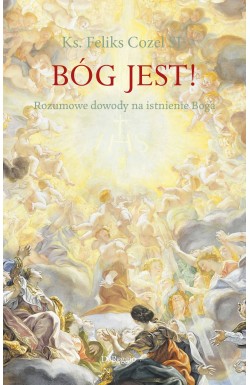
Bóg jest! Rozumowe dowody na istnienie Boga.
30,00 zł
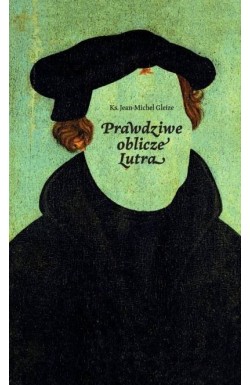
Autor: Fr. Jean-Michel Gleize
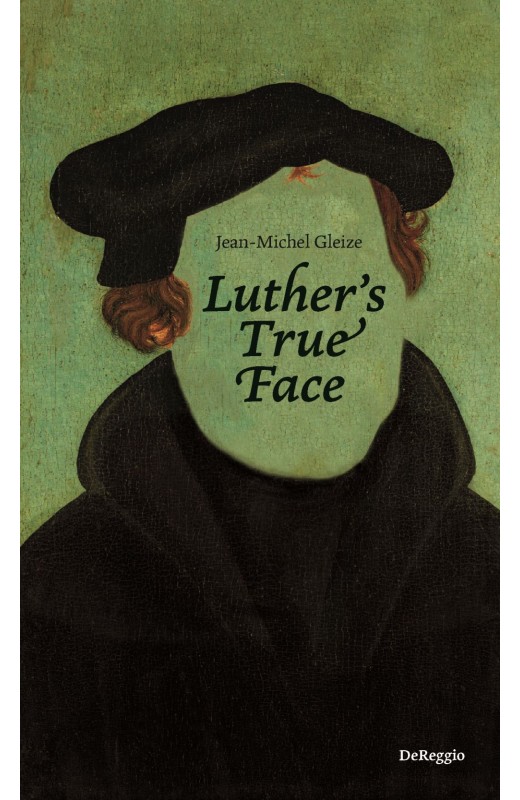
Tytuł: Luther's true face
Tytuł oryginału: Le vrai visage de Luther
Przekład z języka francuskiego: Mary Molline
Wydawnictwo: DeReggio Sp. z o.o.
Miejsce i rok wydania: Warszawa, 2019
Oprawa: twarda
Liczba stron: 160
Format: 125 x 200 mm
ISBN: 9788394449933
Who is Luther really? Is there a true Luther behind the caricature? That is Fr. Gleize’s question. He asks it very clearly and gives the reader a full taste of the answer and its developments.
In his Triumphant Way (Voie Triomphale), Canon Egret begins by describing Luther seated at the altar as before the table of an inn, holding the chalice like a glass, drinking, laughing and shouting. Such is the typical caricature of the monk Martin Luther. But the rest is more realistic: There is something of Rabelais in him. But his cheer does not last, it quickly peters out. Elusive ideas race through his head; unfathomable anguish harasses him. His joy turns to fury. His preaching grows heavy with insults. He insults the devil, he insults his enemies, and does not even spare his friends. He seizes the Bible, devours it, even translates it, and does not understand it. The part he understands the least in the Bible is the Gospel…
For the tall, thin Brother Martin, is a faithful, ascetical monk who wishes to sanctify himself. But he is afraid of being damned. So instead of placing his trust in God and asking for the grace to resist temptation, he creates a personal religion, a consoling, reassuring religion: To be saved, it is enough to believe. If one believes, one can sin without danger. Faith saves, faith covers sins. It is useless to practice mortification, to do penance; it is useless, too, to accomplish good works, and to earn indulgences…
The starting point of this new religion, that does not evacuate the Cross of Christ but that seeks to evacuate ours, is the interior crisis of an anguished religious.
But whereas the Apostle St. Paul, who was also tormented by painful weakness, a goad in his flesh that he did not understand, suffered from the depressive moments of a passionate nature and reacted by throwing himself into the arms of God in order to put on the strength of Christ, going so far as to say: For when I am weak, then am I powerful (II Cor. 12:10), Luther curls up with himself and places his trust in…his own trust. And it is the birth of subjective religion.
We must thank Fr. Gleize for describing the steps of this anti-religion’s birth, and analyzing its ruins and consequences: Protestant independence, that leads to the morality of Kant and all the different liberalisms.
But could Luther’s answer be a form of St. Therese of the Child Jesus’ little way? Conscious of her weakness, she, too, threw herself with childlike trust into the fatherly arms of God, into His infinitely merciful love, and armed with divine strength, she became a great man, a virile soul that no combat could undo. Therese, in the hands of God, is the anti-Luther”.
Preface: Mgr Bernard Tissier de Mallerais
16 innych produktów w tej samej kategorii: